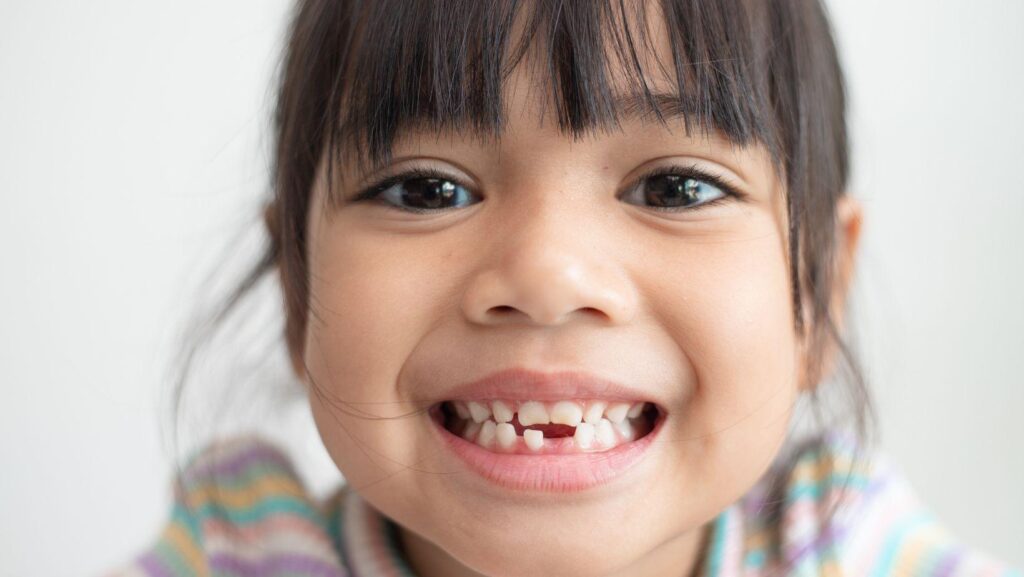
A dentist counting teeth on an X-ray sometimes finds fewer than expected, not because a tooth fell out or decayed, but because it never formed at all. This is hypodontia, a condition present at birth that affects up to 1 in 10 people in some form, making it one of the most common developmental dental anomalies in the country.
Hypodontia happens when tooth buds fail to develop in the jaw before birth, most often due to inherited genetic patterns, and it typically involves one to six missing permanent teeth, usually the second premolars or upper lateral incisors. The condition rarely affects baby teeth. It shows up when adult teeth should erupt and simply don’t.
The gap left behind is not just cosmetic. Missing teeth can shift bite alignment, affect speech clarity, and change how a person feels about their smile. Catching the pattern early, through regular checkups with a dental team like Harmony Dentistry, gives families more options and better outcomes down the road.
What Hypodontia Means and Which Teeth It Affects
Hypodontia refers to the developmental absence of one or more teeth, not counting wisdom teeth, and it sits on a spectrum with related conditions that describe more severe forms of missing teeth. The permanent second premolars and upper lateral incisors are affected far more often than any other teeth, and the condition shows up differently depending on whether it involves baby teeth or the adult set.
How Hypodontia Differs From Oligodontia and Anodontia
Hypodontia, oligodontia, and anodontia describe the same underlying process at different scales. Hypodontia means one to six teeth are congenitally missing. Oligodontia describes the absence of more than six teeth, a more severe presentation often tied to genetic syndromes. Anodontia, the rarest of the three, means a complete absence of teeth and is almost always linked to a condition called ectodermal dysplasia. Dentists use these distinctions to gauge how extensively the jaw and dental arch will need reconstruction or restoration.
Which Permanent Teeth Are Most Often Absent
Second premolars and upper lateral incisors top the list by a wide margin. Third molars (wisdom teeth) are excluded from the hypodontia definition entirely, even though they’re commonly absent too. When lateral incisors are affected, they sometimes appear as smaller, cone-shaped “peg laterals” instead of being fully absent, which is considered part of the same underlying pattern.
Why Missing Baby Teeth and Adult Teeth Require Different Attention
Missing baby teeth is rare, but when it happens, it’s a strong signal that the corresponding permanent tooth will be missing too. A missing baby tooth rarely causes urgent problems on its own, since the jaw is still growing. Missing permanent teeth carry more weight because there’s no natural successor waiting to erupt, which makes long-term planning necessary from the point of diagnosis.
Why Do Teeth Fail to Develop Before Birth?
Teeth fail to develop when the dental lamina, the band of tissue beneath the gums responsible for forming tooth buds, doesn’t complete that process correctly during fetal growth. Genetics drives most cases, though certain syndromes and prenatal conditions play a role as well.
The Role of Genetics and Family History
Inherited gene mutations are the leading cause of hypodontia, and the condition often runs in families. If a parent or sibling is missing specific teeth, there’s a meaningfully higher chance of the same pattern appearing in children. Researchers have linked hypodontia to mutations in genes that guide tooth development, including MSX1 and PAX9, which help explain why the condition clusters in certain family lines.
Syndromes and Health Conditions Linked to Missing Teeth
Ectodermal dysplasia is the syndrome most strongly associated with severe tooth agenesis, and it can produce anodontia in its most extreme form. Cleft lip and palate, Down syndrome, and certain other genetic syndromes also raise the likelihood of missing teeth. In these cases, hypodontia tends to appear alongside other developmental features affecting hair, skin, or nails, since ectodermal tissues share developmental origins with teeth.
Pregnancy and Early-Life Factors That May Raise Risk
Disruptions during fetal development, including certain infections or exposures during pregnancy, have been associated with interrupted tooth bud formation. Trauma or illness in early childhood can occasionally affect a developing tooth bud as well. These environmental factors matter far less often than genetics, but they’re part of why a dentist takes a full medical and family history when investigating a missing tooth.
How Dentists Diagnose and Manage Congenitally Missing Teeth
Dentists confirm hypodontia through a combination of clinical timing checks and X-ray imaging, then build a treatment plan around the child’s remaining growth. Diagnosis often starts with a simple observation: a tooth that should have erupted by a certain age hasn’t shown up.
When a Delayed Tooth May Signal Hypodontia
A permanent tooth that hasn’t erupted by its expected age range is the first clue dentists watch for. Most permanent teeth follow a predictable eruption schedule, so a gap that persists well past that window warrants a closer look. Baby teeth that stay in place longer than usual, with no adult tooth pushing up beneath them, are another common sign.
How Dental X-Rays Confirm a Tooth Is Absent
X-rays are the only reliable way to confirm a tooth bud never formed, since a delayed eruption can also mean a tooth is impacted or growing in an unusual position. A panoramic X-ray lets a dentist see the entire jaw and count developing tooth buds at once. If no bud appears where one is expected, and there’s no sign of impaction, that confirms congenital absence rather than delay.
Treatment Options as the Jaw and Teeth Develop
Treatment shifts depending on the patient’s age and how many teeth are missing. Options include:
- Space maintainers to hold room open for future treatment while the jaw is still growing
- Orthodontic space closure, shifting adjacent teeth to close a gap without needing a replacement tooth
- Dental implants, placed once jaw growth is complete, typically in the late teens or older
- Fixed bridges or removable partial dentures for patients not ready for or not suited to implants
- Bonding or veneers to reshape a nearby tooth, such as filling out a peg-shaped lateral incisor
A prosthodontist or orthodontist usually coordinates this plan, since timing implant placement too early, before jaw growth finishes, can compromise long-term results.
How Untreated Gaps Can Affect Biting, Speech, and Confidence
Untreated gaps can shift a person’s bite over time, as neighboring teeth drift into open spaces and change how upper and lower teeth meet. This drift can make chewing less efficient and put uneven pressure on remaining teeth. Speech, especially sounds that rely on the front teeth, can also be affected when incisors are missing. Beyond function, visible gaps in the smile line are a common source of self-consciousness, particularly during adolescence.
Early Dental Planning Protects Function and Future Options
Hypodontia is a genetic, developmental condition, present well before a tooth’s expected eruption date and confirmed through X-ray imaging rather than guesswork. The second premolars and upper lateral incisors are affected most often, and family history is the strongest predictor of who will develop the condition.
Early diagnosis gives a dentist or orthodontist room to plan around the jaw’s remaining growth, whether that means holding space, guiding teeth into better positions, or timing an implant for when it will last. Waiting until adulthood to address a gap that was visible on X-rays in childhood often means more complex, more costly treatment later. A dental visit that flags a missing tooth bud early is the single most useful step toward keeping the bite functional and the smile complete.