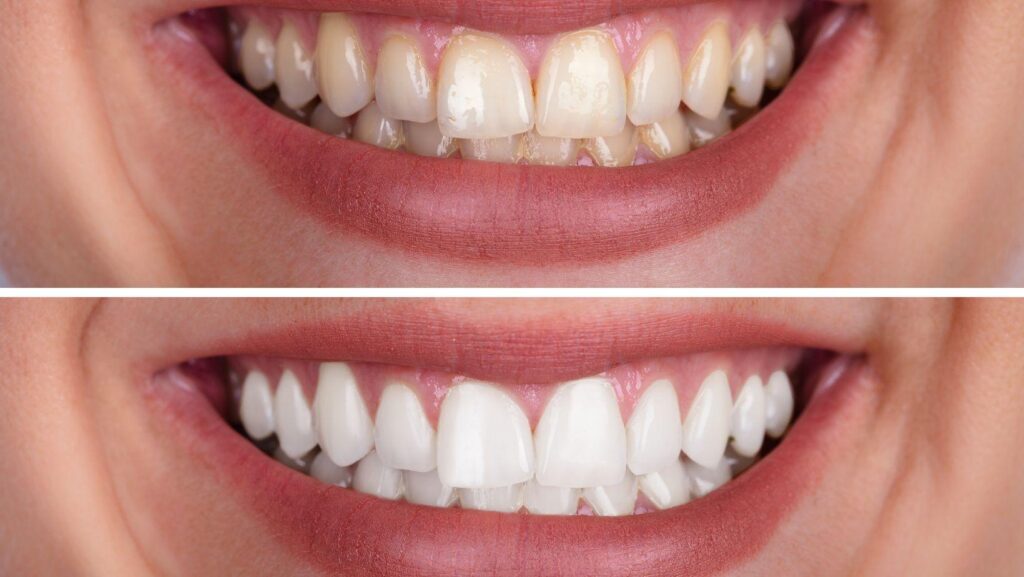
A single dark tooth stands out against a row of natural white ones, and no amount of surface whitening fixes it. That’s because the stain lives inside the tooth structure itself, not on the enamel where whitening strips or in-office trays can reach it.
Internal bleaching solves this by placing a whitening agent directly inside the tooth, in the space where the nerve used to be. Internal bleaching whitens a single darkened, root-canal-treated tooth by sealing a bleaching agent inside the pulp chamber, making it the standard fix for endodontists and cosmetic dentists treating trauma-related or root-canal discoloration.
Dentists have used this approach, sometimes called the walking bleach technique, since 1938. It remains a conservative option compared to grinding down a tooth for a crown or veneer, and it’s worth asking a dental team like Parkside Dental Care whether it fits your case.
What Internal Bleaching Treats and Why It Works
Internal bleaching corrects discoloration that starts inside the tooth, where surface whitening products can’t penetrate. It works by oxidizing stain molecules trapped in the dentin, the layer beneath the enamel, and it’s only possible on teeth that no longer have a living nerve.
Why a Single Tooth Can Turn Gray, Brown, or Yellow
A tooth usually darkens after trauma, a root canal, or internal bleeding within the pulp chamber. A blow to the mouth can cause internal bleeding that seeps into the dentin, leaving a gray or purplish tint even if the tooth was never treated by a dentist.
Root canal therapy is another common cause. Leftover tissue remnants, certain filling materials, or the sealants used during the procedure can react with the dentin over time and darken it from within.
How Internal Bleaching Differs From External Whitening
External whitening treats the outer enamel surface, while internal bleaching works from inside the tooth’s hollow chamber. Whitening strips, trays, and in-office treatments apply peroxide gel to the front of the tooth, lightening surface stains from coffee, wine, or aging.
That approach does nothing for a tooth discolored from the inside. Internal bleaching places the whitening agent directly into the pulp chamber, sealed in place so it can lighten the dentin from within rather than the enamel surface.
Who Is a Candidate for Treatment
Good candidates have a single non-vital tooth (one that has already had a root canal) with intrinsic discoloration and no active infection. This makes it a common option for front teeth affected by past trauma or endodontic treatment.
It doesn’t work on teeth that still have a live nerve, since the whitening agent needs access to the empty pulp chamber. A dentist will also check that the root canal filling is sound and that the tooth has enough healthy structure to support the treatment.
What Happens During the Walking Bleach Procedure
The walking bleach technique involves sealing a bleaching agent inside the tooth’s pulp chamber and letting it sit for several days between office visits. It’s the most widely used internal bleaching method, and the name comes from the idea that patients “walk around” with the whitening agent working inside the tooth.
Why Root Canal Treatment Is Required
Internal bleaching only works on a tooth that has already had root canal therapy, since the procedure depends on access to the empty pulp chamber. If the tooth hasn’t had a root canal yet, that treatment comes first.
The dentist confirms the root canal filling is intact and free of leakage before starting. A poorly sealed root canal can let bleaching chemicals or bacteria reach the surrounding bone, so this check matters before any whitening agent goes in.
How the Whitening Agent Is Placed and Sealed
The dentist opens a small access point at the back of the tooth and places a bleaching agent, often sodium perborate mixed with water or hydrogen peroxide, inside the pulp chamber. A protective barrier goes over the root canal filling first to keep the bleaching material from reaching the root tip.
The access opening is then sealed with a temporary filling. The tooth is left to whiten from the inside for several days before the next visit.
How Many Visits Are Needed for Results
Most cases take two to four appointments, spaced roughly a week apart, though results vary by how deep the original stain sits. At each visit, the dentist checks the shade, replaces the bleaching agent if needed, and reseals the tooth.
Some teeth lighten noticeably after a single round; others need repeated applications over several weeks. Once the desired shade is reached, the dentist places a permanent filling.
What to Expect After Treatment
Expect a brighter tooth within one to a few weeks, with results that hold up well over time. Some patients notice mild sensitivity during treatment, which typically resolves once the final restoration is placed.
The dentist will match the shade to neighboring teeth rather than over-whitening, since a tooth that’s too bright looks as out of place as one that’s too dark. Follow-up care is minimal since there’s no living pulp to protect.
Cost, Risks, and Alternatives to Consider
Internal bleaching costs less than a crown or veneer and carries a small but real risk of root resorption, which is why dentists weigh it against other restorative options for the same dark tooth. It’s a minimally invasive choice because it doesn’t require cutting into healthy tooth structure the way a crown or veneer does.
How Much Does Internal Bleaching Cost?
Internal bleaching generally costs a few hundred dollars per tooth, though the exact fee depends on how many visits are needed and whether a follow-up restoration is included. Endodontists and cosmetic dentists set their own fees, and dental insurance sometimes covers part of the cost when the discoloration stems from trauma or a prior root canal.
Ask for a written estimate that separates the bleaching visits from any final filling or crown work, since those are often billed separately.
Potential Risks and Limitations
The main risk is external cervical resorption, a rare complication where the bleaching agent irritates the root surface near the gumline. Placing a protective barrier over the root canal filling before bleaching reduces this risk significantly.
Results also aren’t always permanent. Some teeth gradually darken again over the years, which may call for a touch-up treatment. Internal bleaching won’t work on a tooth with a living nerve, and it can’t fix chips, cracks, or structural damage.
When Bonding, Veneers, or Crowns May Be Better Options
Bonding, veneers, or a crown suit teeth with structural damage or discoloration that internal bleaching can’t fully correct. A crown addresses both appearance and strength, which matters for a tooth weakened by a large filling or extensive decay.
|
Option |
Cost Range |
Invasiveness |
Best For |
|
Internal Bleaching |
Low |
Minimal |
Single dark, root-canal-treated tooth |
|
Bonding |
Low to moderate |
Minimal |
Minor shade mismatch or small chips |
|
Veneers |
Moderate to high |
Moderate (enamel removal) |
Discoloration plus shape or alignment concerns |
|
Crown |
High |
Significant (tooth reshaping) |
Structurally weak or heavily restored tooth |
Some dentists recommend internal bleaching first, since it can eliminate the need for a crown altogether if the shade correction is successful. A crown remains the fallback when the tooth needs structural reinforcement regardless of color.
Restoring a Dark Tooth With the Right Treatment
A single discolored tooth doesn’t need to define your smile. Internal bleaching offers a conservative, targeted way to correct discoloration that starts inside the tooth, without cutting down healthy structure the way a crown or veneer would.
Talk to an endodontist or cosmetic dentist about whether your tooth is a good candidate, particularly if it has already had root canal treatment. For teeth with structural damage beyond discoloration, bonding, veneers, or a crown may serve you better.